
For clinicians and referral partners

A twelve-month, social model recovery program for men ages 24–35 in Philadelphia.

Program in development · Target opening: end of 2027

Population
Men ages 24–35
Location
Philadelphia
Length
Approximately 12 months
Framework
Twelve Step
Scope
Non-clinical, social model
Payment
Private pay

Why Spruce Street

A familiar pattern: stabilize, step down, drift, relapse, return.

That sequence repeats itself for too many men. Between stabilization and independence there is work that belongs to neither: learning what recovery actually requires day to day, then practicing it long enough that it holds without supervision. Too often, no one clearly owns that work.

Sober living is the setting most often expected to fill that role. Structure, accountability, and community are its standard promises—but those words alone say very little about what a resident will actually practice each day. Spruce Street is deliberately designed to embed that behavioral work in ordinary life through small, observable obligations, immediate feedback, and the gradual return of freedom while behavior is still visible.

The aim is not simply to maintain compliance while structure is present. It is to give the principles of recovery enough repetition under ordinary pressure that they become reliable habits.

Like a flight simulator for recovery, Spruce Street creates structured opportunities to practice, allowing patterns to surface while mistakes remain survivable, observable, and useful.

The document

The Program Overview

The full overview sets out the twelve-month structure in detail. It opens with an eight-page referral brief for anyone who wants the shape of the program without reading the whole document.

The program is non-clinical. Residents can continue working with their own therapists, psychiatrists, physicians, and other outside providers.

Open the Program Overview

PDF · 40 pages

An exploratory conversation

Does this fill a gap you encounter?

We want to understand where the transition from treatment or other structured settings into independent life tends to break down, what existing options do well, and what is still difficult to find.

We are particularly interested in three questions:

  1. When does someone need more structure than conventional sober living typically provides?
  2. What makes a long-term recovery program credible as a referral destination?
  3. Where does this model appear promising, incomplete, or poorly matched to the needs you see?

We are not looking for an endorsement or asking you to evaluate a finished program. We want to learn whether this model could become useful in your work—and begin relationships with the people whose judgment we would want around it as it develops.

Talk with the founders

The conversation is exploratory. Spruce Street is not open and is not accepting referrals.

Who We Are

The people behind the proposal

Spruce Street is being developed by Ty Stillerman and Chase Wilson, who met nearly a decade ago as residents of New Life House and have both remained active in the recovery community since.

Ty Stillerman

Ty Stillerman

Ty Stillerman is a co-founder of Spruce Street Recovery and will lead the organization’s programming and daily operations. He spent four years as Assistant Program Director of New Life House in Los Angeles, the long-term recovery program on which much of Spruce Street’s model is based. In that role, he helped oversee day-to-day house operations and worked closely with residents through the behavioral and interpersonal challenges of long-term recovery.

Ty earned a B.A. in Economics and Public Policy from the University of California, Berkeley. He now works at the Foundation for Individual Rights and Expression, where much of his work involves getting people who disagree profoundly to talk to each other rather than at each other—which is, as it happens, much of what running a house like this consists of.

His experience as both a resident and an Assistant Program Director informs Spruce Street’s approach to building a structured, accountable community in which men learn to live differently over time.

ty@sprucestreetrecovery.com
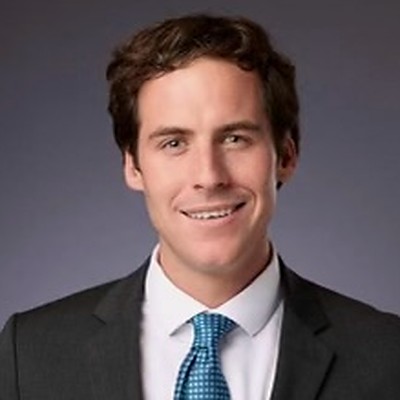
Chase Wilson

Chase Wilson

Chase Wilson is a co-founder of Spruce Street Recovery and will lead the organization’s business operations and finance. He spent three years as a Program Manager at The People Concern in Los Angeles, where he led street outreach efforts connecting people experiencing homelessness with treatment, housing, and other supportive services.

Chase earned a Master’s in Urban Planning from the University of Southern California, where his work focused in part on public health and the economic impacts of the opioid epidemic. He is currently completing his MBA at the USC Marshall School of Business, with an expected graduation in December 2026. He is also a co-owner of Café Tropical, a longstanding Cuban restaurant in Los Angeles that he and a group of partners purchased and reopened. Café Tropical has long served as a gathering place for the local recovery community, hosting more than 30 twelve-step meetings each week.

Chase’s background in social services, urban policy, and business is aimed at keeping Spruce Street operationally durable as well as mission-driven.

chase@sprucestreetrecovery.com